


Suck it Up ™ - Hole Them All
Tactile Games
I spent time with Suck it Up ™ - Hole Them All as a light, casual puzzle game, and my first impression was easy to understand: it is built around the simple satisfaction of clearing objects from a play area. That sounds modest, but this kind of design can be surprisingly effective when I want something I can start quickly, play in short bursts, and put down without losing the thread of a larger story.
The game comes from Tactile Games and is presented with the store summary “Satisfying Hole Sort Puzzles” and the short description “Suck it Up.” Those phrases give a clearer idea of its tone than a long feature list would. This is not a demanding strategy game or a narrative adventure. It belongs to the casual game category, and its appeal is the immediate physical feeling of sorting and removing things rather than building a complicated long-term plan.
It is free to download and aimed at Everyone, which makes it an easy recommendation for a family tablet, a quick personal break, or anyone who prefers puzzle games without a steep learning curve. The important qualification is that free access is not the same as unlimited value at no cost: the game includes optional in-app purchases ranging from $0.49 to $99.99 per item. I would treat the free version as the sensible starting point and decide only later whether spending adds enough enjoyment for my own habits.
How the puzzle loop feels in everyday play
The strongest part of the experience is the directness of the central idea. I do not need to remember a complicated control scheme or study a large map before making progress. The focus stays on the hole-sorting action, so the game can fit naturally into small gaps in the day. I can imagine playing a few rounds while waiting for an appointment, taking a short break from work, or relaxing before bed when a more demanding game would feel like effort.
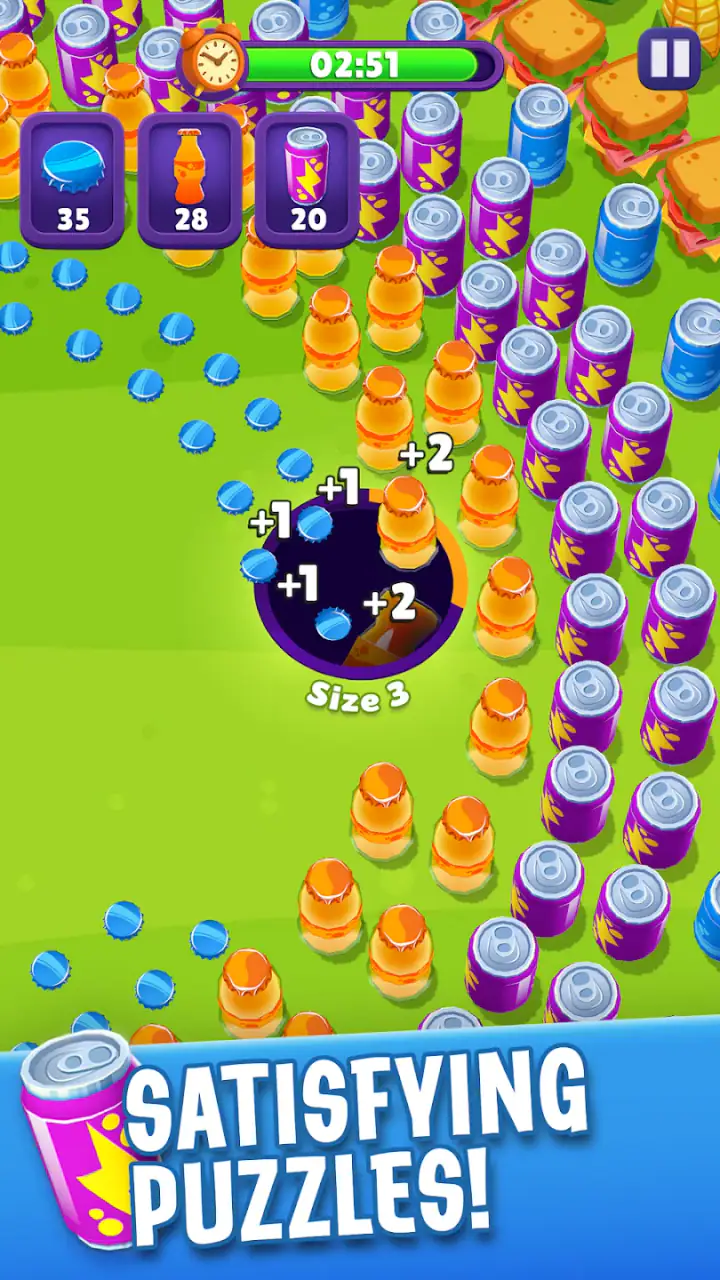
That simplicity also gives the game its particular rhythm. The pleasure comes from seeing a crowded arrangement become more orderly as objects are drawn into the hole. In my experience with casual puzzle design, this kind of visual cleanup works best when I can understand the immediate goal at a glance. The real strength is its low mental entry cost: I can begin playing almost immediately instead of spending the first session learning systems that may never matter to me.
Related News






At the same time, I would not confuse an easy start with a completely mindless experience. Hole-sorting puzzles can ask me to notice position, timing, and the order in which I remove pieces. A careless move may leave an awkward arrangement, while a moment of planning can make the board feel much cleaner. That creates a useful middle ground: the game remains approachable, but I still get a small sense of solving something rather than merely tapping through a passive animation.
One practical tip is to resist the urge to clear the most obvious object first. I found that looking at the whole arrangement before acting is more rewarding than reacting to the nearest item. The visible opening may be tempting, but another object can affect what becomes accessible afterward. This is a small habit, yet it changes the game from automatic swiping into a compact planning exercise.
Another useful approach is to treat each board as a short visual problem rather than a race. I get more from checking which pieces may block one another and which removal creates the most room. That mindset is especially helpful for players who normally enjoy sorting games, because the satisfaction comes not only from finishing but also from finding a cleaner sequence of actions.
Gallery
Why the tactile idea works
The “suck it up” concept gives the game a clear identity. Instead of asking me to match symbols, build a settlement, or manage a large collection, it centers the action on gathering objects into a hole. That physical metaphor makes the result easy to read: clutter disappears, space opens, and the board looks transformed. For a casual game, that clarity matters more than an elaborate premise.
I also like that the concept supports short sessions without requiring me to remember a storyline. If I return after a day away, I do not need to reconstruct characters or objectives. I can simply look at the current puzzle and decide what to remove next. This makes it a better fit for fragmented play than story-heavy alternatives, where interruptions can weaken the experience.
The trade-off is that a focused concept can become repetitive for players who need constant novelty. If the satisfaction of clearing and sorting does not appeal to me personally, there may be little else here to compensate. People looking for deep character development, competitive matches, or a large strategic system should look toward a different type of game rather than expecting this one to grow into something it was not designed to be.
What the free entry point means for value
Because the game is free, my first question is not whether it is worth buying. It is whether the no-cost entry gives me enough of the core experience to judge the game honestly. For a casual puzzle title, that is a reasonable arrangement: I can test whether the hole-sorting loop suits me before considering any optional purchase.
The purchase range deserves attention, particularly at the upper end. A low-cost item may feel easy to justify for a game I return to often, while a much larger purchase requires a more careful personal limit. I would not spend simply because a level becomes inconvenient or because I feel pushed to keep momentum. My rule would be to play free for several sessions, decide whether the basic loop still feels fresh, and only then consider a small purchase if it clearly improves my enjoyment.
That approach also protects the game’s strongest quality: its casual nature. Spending can be sensible when it supports a hobby I use regularly, but it should not turn a quick relaxation game into a source of pressure. Since the available purchase amounts vary from $0.49 to $99.99 per item, I would pay close attention before confirming anything, especially if a child is using the device.
The game has an average rating of 4.5 from around 7,100 ratings, alongside roughly 1,200 written reviews. Those figures suggest that many players are responding positively, but I still would not use popularity as a substitute for personal fit. A highly rated sorting game can remain uninteresting to someone who prefers word puzzles or action games. The rating is a useful signal to try it, not a promise that every session will feel fresh.
Small decisions that make the experience better
My first recommendation is to play with patience during the opening moments of a puzzle. The fastest-looking move is not always the most useful one. I would scan for clusters, identify what appears to be blocking other pieces, and choose the action that creates the most future space. This makes the game feel more deliberate without turning it into a demanding analysis exercise.
Second, I would use it as a reset between tasks rather than as a background game during concentration-heavy work. The quick puzzles are well suited to a short mental change of pace, but the same visual focus that makes them satisfying can become distracting if I keep reaching for another round. Setting a natural stopping point after a small session helps preserve the relaxing quality.
Third, I would judge value by return frequency, not by the number of available items or the size of the install base. If I open it repeatedly because the clearing action genuinely helps me unwind, a modest optional purchase may feel reasonable. If I only play once out of curiosity, the free access has already done its job and I would stop there.
Finally, I would make the purchase decision with the game’s age rating in mind. The Everyone rating makes the concept broadly accessible, but broad accessibility does not remove the need for household spending rules. On a shared device, I would check that optional purchases are controlled in a way that matches the player’s age and the owner’s expectations.
Where it sits beside other casual puzzles
Compared with match-three games, this one offers a more physical sense of clearing space and less emphasis on forming traditional symbol combinations. Players who enjoy watching a board visibly empty may find the hole mechanic more immediately satisfying. On the other hand, someone who likes chain reactions, special pieces, or a strong collection system may prefer a conventional match-three alternative.
Compared with word puzzles, the game asks for visual arrangement skills instead of vocabulary. That makes it a better choice when I want something language-independent and quick to understand. Word-game fans who enjoy learning, clues, or a feeling of mental exercise may find this experience too narrow.
Compared with idle or merge games, the value here is more immediate. I am not relying on a long wait for resources or maintaining a large set of upgrades to enjoy the basic action. The downside is that players who like persistent progression and a sense of building an account over time may find a focused clearing loop less motivating.
Those comparisons point to the main buying decision. I would choose this game for a compact, tactile puzzle routine. I would skip it in favor of another casual title if my priority were social competition, a deep upgrade path, a story, or a large variety of mechanics. The game’s focused design is a strength only when that focus matches what I want from a short session.
Who is likely to get the most from it
I think it is particularly suitable for casual players who want an uncomplicated first step into puzzle games. The Everyone rating and straightforward premise make it approachable, while the sorting element gives attentive players something to think about beyond random tapping. It can also work well for people who prefer games that do not require a long uninterrupted session.
A realistic everyday use case would be a ten-minute break after finishing a difficult task. I could open the game, solve a few hole-sorting puzzles, and then return to work with a cleaner mental boundary between tasks. It also suits a quiet evening when I want interaction without the emotional intensity of a competitive match or the commitment of a role-playing game.
Families may appreciate the accessible concept, but I would still explain the purchase side before handing over the device. Free entry is convenient, yet the presence of optional items means the game deserves the same basic spending awareness as any other free-to-play title. For an adult who controls the device, this is easy to manage through a simple household rule: enjoy the free loop first, and never buy impulsively.
I would be more cautious recommending it to players who need a constant sense of discovery. The central action is clear from the beginning, so its appeal depends on how much enjoyment I get from refining decisions inside that action. If I quickly tire of sorting, the game may not offer enough variety to change my mind.
Device and access considerations
The game supports Android devices running version 6.0 or later, which gives it a broad technical starting point for compatible users. The current version is 1.42.0, so I would keep the installation updated through the normal app store process to use the intended current build. I would also check compatibility before installing on an older device, particularly if it is a spare phone or a family tablet that has not been updated recently.
Its free price makes trying it straightforward, but I would still consider where I plan to play. A casual puzzle is most useful when it is available during the moments I actually have free. If I want a game for long journeys, I would test my own comfort with it during a longer session rather than assuming that a short-session design will remain engaging for hours.
The game has passed the early curiosity stage with over 500,000 installs, which gives me some confidence that it has found an audience beyond a tiny experiment. Still, installs tell me more about reach than durability. My own test would be simple: after the novelty of the hole mechanic fades, do I still enjoy thinking about the next removal? If yes, the game has lasting value for me; if not, no popularity figure changes that conclusion.
My final recommendation
My verdict is to try it for free, but to keep expectations focused. Suck it Up ™ - Hole Them All is at its best as a compact visual puzzle built around the satisfaction of clearing clutter and making small decisions. I like its approachable structure, its easy fit into short breaks, and the way a simple premise can still reward planning when I stop reacting and start looking ahead.
I would recommend it to anyone who enjoys sorting, visual cleanup, and low-pressure casual play. It is also a good candidate for a shared family device when the owner keeps optional spending under control. The free entry point removes much of the risk of trying it, while the broad age rating makes the concept easy to understand.
I would skip it if I want a story, multiplayer competition, extensive progression, or a constantly changing set of mechanics. I would also avoid paying at the upper end of the purchase range unless the game had become a regular part of my routine and I had already decided exactly what I was comfortable spending. The fairest way to judge it is to ask whether the core clearing action remains satisfying after the first few sessions.
For me, the answer is yes, with a clear limit: it is a pleasant casual puzzle, not an all-purpose mobile game. Its value comes from doing one thing cleanly and making that thing easy to revisit. Start free, play thoughtfully rather than hurriedly, and spend only when the enjoyment is already proven. That is the approach most likely to make this small, focused game feel worthwhile.
FAQs for Suck it Up ™ - Hole Them All
What is Suck it Up ™ - Hole Them All, and how is the game played?
Suck it Up ™ - Hole Them All is a casual arcade game built around controlling a hole that moves across different stages and absorbs objects in its path. Your goal is generally to collect as many items as possible, clear areas, and complete objectives before time runs out or the level ends. The controls are simple and designed for quick, pick-up-and-play sessions.
Is Suck it Up ™ - Hole Them All free to download and play?
The game can typically be downloaded and started without an upfront purchase, making it accessible to players who want a casual experience. However, free-to-play games may include advertising, optional in-app purchases, or both. These extras can sometimes provide cosmetic items, bonuses, or other conveniences. Check the store listing on your device for the current pricing, advertisements, and purchase details.
Does Suck it Up ™ - Hole Them All require an internet connection?
Whether an internet connection is required can depend on the version installed and the feature you are using. Basic levels may work without a constant connection, which is useful for playing while traveling or when mobile data is unavailable. Advertisements, updates, cloud features, and certain online functions may still need internet access. Test the game offline after installation to confirm its limitations.
Is Suck it Up ™ - Hole Them All suitable for children?
The game uses straightforward controls and a colorful, cartoon-style presentation, so it may be approachable for younger players. Nevertheless, parents should review the official age rating and privacy information before allowing children to play. Advertising and optional purchases are also worth checking, particularly on shared devices. Parental controls can help prevent accidental purchases and restrict unsuitable advertisements or online activity.
What should I know about performance, permissions, and in-app purchases before downloading?
Suck it Up ™ - Hole Them All is intended to be a lightweight casual game, but performance can vary according to your phone or tablet, operating system, available storage, and background apps. Keep the device updated and download the game from an official store. Before accepting permissions or making purchases, review what access is requested and whether payment confirmation or parental controls are enabled.
Pros
- Simple controls make it easy to start playing immediately.
- Short levels are convenient for quick gaming sessions.
- Colorful visuals give the game a cheerful
- casual feel.
- Collecting objects provides a clear goal in every stage.
- Works well for players who prefer relaxed
- low-pressure gameplay.
Cons
- Gameplay can become repetitive after several levels.
- Some stages may feel too easy for experienced puzzle players.
- Ads may interrupt the experience between or after levels.
- Progression offers limited depth beyond completing each hole.
- Performance may vary on older or less powerful devices.


